Best Height to Cut Grass (By Grass Type)
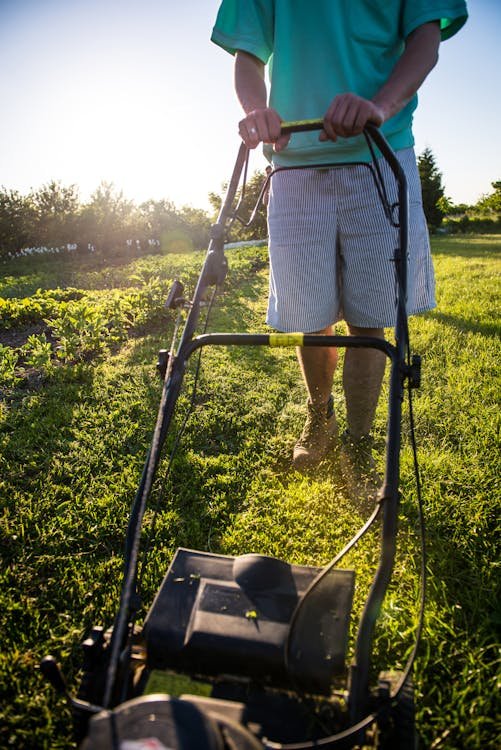
The height at which you cut your grass matters more than most homeowners realize. Cut it too short and you stress the roots, invite weeds, and risk scalping. Leave it too long and you create conditions for fungal disease and pest activity. The right mowing height depends on your grass species—and the difference between right and wrong can be dramatic.
Why Mowing Height Matters
Every grass blade is a photosynthesizing organ. The leaf blade captures sunlight and converts it into energy that feeds the root system. When you cut grass very short, you dramatically reduce the plant’s ability to produce food, forcing it to deplete root reserves just to regrow its blades.
The consequences of cutting too low:
- Shallow, weak root systems
- Increased weed pressure (bare soil = weed opportunity)
- Greater vulnerability to drought and heat stress
- Increased disease susceptibility
- Brown scalping if the growing crown is damaged
The consequences of cutting too high:
- Increased moisture retention at the soil surface (fungal disease risk)
- Reduced air circulation
- Habitat for pests like grubs and chinch bugs
- Uneven, puffy appearance
Finding the right height for your specific grass type is one of the easiest ways to improve lawn health. For additional mowing techniques — frequency, patterns, blade maintenance — see our companion guide on lawn mowing tips.
Best Mowing Heights by Grass Type
Cool-Season Grasses
Kentucky Bluegrass
- Optimal range: 2.5–3.5 inches
- Minimum: 2 inches
- Summer height: 3.5–4 inches (raise in heat)
- Notes: Sensitive to scalping; maintain consistently. Lower end of range during spring and fall active growth; higher end during summer stress.
Tall Fescue
- Optimal range: 3–4 inches
- Minimum: 2.5 inches
- Summer height: 4 inches
- Notes: Deep-rooted and tolerates slightly higher heights well. Never cut below 2.5 inches—damages the crown and reduces drought tolerance significantly.
Fine Fescue (Creeping Red, Chewings, Hard, Sheep)
- Optimal range: 2.5–3.5 inches
- Minimum: 2 inches
- Summer height: 3.5 inches
- Notes: Fine fescues handle low-maintenance mowing schedules well. Avoid scalping.
Perennial Ryegrass
- Optimal range: 2–3 inches
- Minimum: 1.5 inches
- Summer height: 3 inches
- Notes: Handles lower cuts relatively well, making it popular for athletic fields. Sharp blades are critical—ryegrass shows dull blade damage very clearly.
Annual Ryegrass
- Optimal range: 2–3 inches
- Notes: Used as temporary cover or for winter overseeding in the South; same height recommendations as perennial ryegrass.
Warm-Season Grasses
Bermuda Grass
- Optimal range: 0.5–1.5 inches
- Minimum: 0.5 inches
- Maximum: 2 inches
- Notes: Bermuda is the lowest-cut major turfgrass. Its horizontal growth habit (stolons and rhizomes) means it actually performs better at low heights. Golf courses cut it as low as ⅛ inch. For home lawns, 1–1.5 inches is the sweet spot. See our Bermuda grass care guide for the full picture on maintaining this grass.
Zoysia Grass
- Optimal range: 1–2.5 inches
- Minimum: 0.75 inches
- Maximum: 3 inches
- Notes: Cut height depends on variety. Fine-bladed Zoysia (Emerald, Diamond) prefers lower cuts; coarser varieties (El Toro, Empire) handle slightly higher cuts. Our Zoysia grass care tips go into more detail on variety-specific management.
St. Augustine Grass
- Optimal range: 3–4 inches
- Minimum: 2.5 inches
- Maximum: 4 inches
- Notes: St. Augustine is one of the tallest-cut warm-season grasses. Never cut below 2.5 inches—it damages the stolons and significantly increases disease risk. Learn more about caring for this grass in our St. Augustine grass guide.
Centipede Grass
- Optimal range: 1.5–2.5 inches
- Minimum: 1 inch
- Notes: Centipede is a slow-growing, low-maintenance grass that performs well at moderate heights. Raising height reduces frequency of needed mowing.
Bahiagrass
- Optimal range: 2–4 inches
- Notes: Bahia is tough and adaptable. Higher mowing heights produce better results in most situations.
Seasonal Height Adjustments
Grass needs change throughout the year. A single static mowing height year-round isn’t optimal.
Spring
Start the season 0.5 inches lower than your normal summer height. This removes winterkill and debris, improves sunlight penetration to the crown, and stimulates spring green-up.
Exception: Don’t scalp a lawn emerging from winter dormancy to the point of removing green tissue.
Summer
Raise your cutting height by 0.5–1 inch above your spring/fall height. This is the most impactful adjustment you can make:
- Taller grass shades soil, keeping roots 10–20°F cooler
- Reduces soil moisture evaporation
- Improves drought tolerance significantly
- Reduces weed seed germination
Fall
Gradually lower height back to your spring setting as temperatures cool. Cool-season grass enters its most active growth period in fall—lower heights promote better light penetration and aesthetic appearance.
Before Winter (Cool-Season Grass)
Mow your last 2–3 times of the season, gradually lowering height to reach 2–2.5 inches before the first hard frost. This prevents snow mold from developing in excessively long grass over winter.
How to Set Your Mower to the Right Height
Most rotary mowers have a height adjustment mechanism at each wheel. Here’s how to check and set it accurately:
- Place mower on a flat, hard surface (driveway or sidewalk)
- Use a ruler or tape measure to measure from the ground to the cutting edge of the blade
- Adjust all four wheels to the same height setting
- Verify by measuring again—some mowers have slightly different settings wheel to wheel
Check that all wheels are set equally: An uneven deck causes stripe marks and scalping on one side.
The One-Third Rule Revisited
Whatever mowing height you choose, the one-third rule always applies: never remove more than one-third of the grass blade in a single mowing session.
If you want to maintain Bermuda at 1 inch, mow before it exceeds 1.5 inches. If you maintain Tall Fescue at 3.5 inches, mow before it reaches 5.25 inches.
This rule prevents stress more than any specific height choice.
Quick Reference Chart
| Grass Type | Optimal Height | Summer Height |
|---|---|---|
| Kentucky Bluegrass | 2.5–3.5” | 3.5–4” |
| Tall Fescue | 3–4” | 4” |
| Fine Fescue | 2.5–3.5” | 3.5” |
| Perennial Ryegrass | 2–3” | 3” |
| Bermuda Grass | 0.5–1.5” | 1.5” |
| Zoysia Grass | 1–2.5” | 2.5” |
| St. Augustine | 3–4” | 4” |
| Centipede Grass | 1.5–2.5” | 2.5” |
| Bahiagrass | 2–4” | 4” |
Choosing the right mowing height and sticking to the one-third rule are the simplest, no-cost changes you can make to dramatically improve your lawn’s health and appearance this season.