Lawn Weed Control: How to Get Rid of Common Weeds
Weeds are the eternal enemy of a beautiful lawn—but fighting them effectively requires knowing what you’re dealing with and using the right approach at the right time. Most weed control failures happen because homeowners use the wrong product, apply it at the wrong time, or treat the symptom rather than the cause. This guide walks you through identifying common lawn weeds and eliminating them systematically.
Why Weeds Invade Your Lawn
Understanding why weeds appear helps you fix the root cause rather than just treating symptoms. Weeds don’t invade healthy, dense turf—they exploit weaknesses:
- Thin, sparse grass: Bare soil is a weed seed waiting to sprout
- Soil compaction: Weeds like dandelions and plantain thrive in compacted soil
- Wrong mowing height: Cutting too short removes grass’s competitive advantage
- Poor soil pH: Weeds like oxalis and moss prefer acidic conditions
- Underwatering or overwatering: Creates stress conditions that weaken grass and favor weeds
- Shade areas: Grass thins, creating opportunities for shade-tolerant weeds
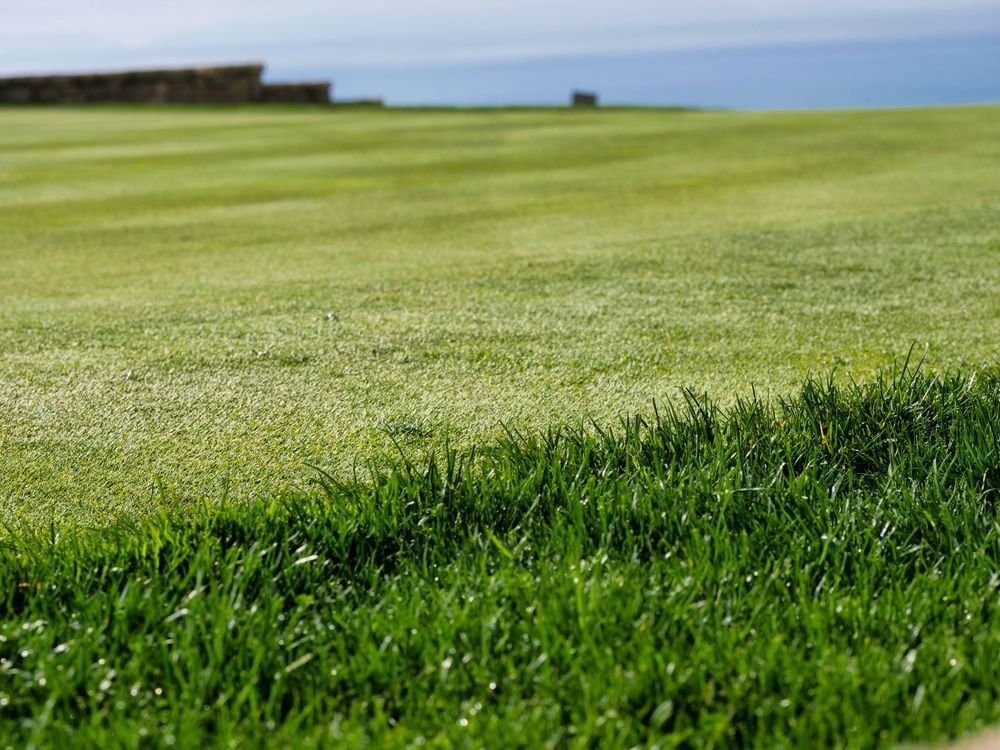
The most effective long-term weed control is a thick, healthy lawn—which crowds out weeds naturally. Herbicides are a tool, not a solution.
Types of Lawn Weeds
Broadleaf Weeds
Have broad, flat leaves (not grass-like). Generally the easiest to control with selective herbicides.
Common broadleaf weeds:
- Dandelion (Taraxacum officinale): Deep taproot, yellow flowers, puffball seed heads. Perennial.
- Clover (Trifolium spp.): Three-leaf clusters, white or pink flowers. Thrives in low-nitrogen lawns.
- Plantain (Plantago spp.): Broad, ribbed leaves, grows in compacted soil. Perennial.
- Chickweed (Stellaria media): Low-growing, delicate leaves, tiny white flowers. Winter annual.
- Oxalis / Wood Sorrel: Three-leaf clover lookalike with heart-shaped leaflets. Persistent.
- Henbit / Deadnettle: Purple flowers, common in cool-season lawns in spring.
- Ground Ivy / Creeping Charlie: Low-growing, scalloped leaves, spreads aggressively. Very difficult to control.
Grassy Weeds
Look like grass and are harder to distinguish from desirable turf. Require special herbicide strategies.
Common grassy weeds:
- Crabgrass (Digitaria spp.): Light green, fingerlike seed heads; annual. Most common summer lawn weed.
- Annual Bluegrass / Poa annua: Light-colored, boat-tip leaves; produces seed heads even when mowed; winter annual.
- Nutsedge (Cyperus spp.): Yellow or purple; grows faster than grass in summer; actually a sedge, not a grass. Triangular stems.
- Quackgrass: Perennial grass weed with long rhizomes; very difficult to control.
- Goosegrass: Similar to crabgrass but darker green, grows in compressed soil.
Pre-Emergent vs. Post-Emergent Herbicides
The most important weed control decision you’ll make is timing. For a deeper dive into how each herbicide type works and when to use them, our guide to pre-emergent vs. post-emergent herbicides explains the chemistry, application windows, and common mistakes to avoid:
Pre-Emergent Herbicides
Pre-emergents prevent weed seeds from germinating. They form a chemical barrier in the soil that kills seeds as they sprout. They do nothing against established weeds.
Best for: Crabgrass, annual bluegrass, chickweed, goosegrass Application timing: Apply before seeds germinate—when soil temperatures reach 50–55°F at 2-inch depth for crabgrass prevention. This is roughly when forsythia blooms in the Northeast or when dogwood blooms further south. Products: Prodiamine (Barricade), Pendimethalin (Scotts Step 1), dithiopyr (Dimension)
Critical note: Pre-emergent herbicides also prevent grass seed from germinating. Do not apply pre-emergent within 60–90 days of seeding or overseeding (check product labels for specifics).
Post-Emergent Herbicides
Post-emergents kill existing weeds. They can be selective (kills only target species) or non-selective (kills all vegetation).
Selective post-emergent (broadleaf control):
- 2,4-D, dicamba, triclopyr, mecoprop (MCPP)—most “weed-and-feed” products contain a combination of these
- Safe on most cool-season and warm-season grasses (check label for your grass type)
- Apply when weeds are actively growing (spring or fall); avoid applications during heat stress
Selective post-emergent (grassy weed control):
- Quinclorac: For crabgrass that has already germinated; fewer options here
- Halosulfuron, sulfentrazone: For nutsedge
Non-selective (glyphosate / Roundup): Kills everything—use only for spot treatment in areas you’ll reseed, or for killing entire problem areas.
How to Control Specific Weeds
Dandelions
Best control: Broadleaf post-emergent herbicide (2,4-D or triclopyr) applied in fall when the plant is actively moving nutrients to roots. Fall treatment kills the entire plant including the root; spring treatment often kills only the top.
For severe infestations, spot-treat with concentrated broadleaf herbicide using a hand sprayer. Manual removal with a dandelion puller is effective if done before seed set—remove the entire taproot.
Crabgrass
Primary control: Pre-emergent herbicide applied in spring before germination. Crabgrass is an annual—it dies at the first frost. Your goal is to prevent it from germinating and setting seed. Our dedicated guide on how to get rid of crabgrass covers pre-emergent timing, curative options, and long-term prevention strategies in greater detail.
If crabgrass is already up: Quinclorac works well on young crabgrass (2–3 tillers). Larger plants are harder to control. Remove any escaped plants before they set seed in late summer.
Long-term prevention: Overseed thin areas (crabgrass can’t invade dense turf), maintain proper mowing height, and apply pre-emergent every spring.
Clover
Clover thrives in low-nitrogen lawns—it fixes atmospheric nitrogen, giving it an advantage over struggling grass.
Control: Apply a broadleaf herbicide containing triclopyr, dicamba, or MCPA. May require 2–3 applications for complete control.
Permanent fix: Maintain adequate soil nitrogen through proper fertilizing. A thick, nitrogen-fed lawn crowds out clover naturally.
Nutsedge
Nutsedge is one of the toughest lawn weeds because it reproduces via underground nutlets (tubers) that can persist for years.
Control: Halosulfuron (Sedgehammer) or sulfentrazone. Apply when nutsedge is actively growing (June–August). Multiple applications over multiple seasons may be needed to exhaust the nutlet bank.
Never pull nutsedge by hand: Pulling breaks plants at the stem and stimulates nutlet production.
Ground Ivy / Creeping Charlie
One of the most difficult broadleaf weeds to eliminate. Multiple applications of triclopyr-based herbicide in fall are most effective.
Application tip: Apply in fall when the plant is actively moving nutrients to roots (the same mechanism that makes dandelion fall treatment effective). Add a small amount of dish soap to herbicide solution to improve adhesion on the waxy leaves.
Organic Weed Control Methods
For homeowners who prefer to avoid synthetic herbicides, our full guide to organic lawn care and natural solutions covers a wider range of chemical-free approaches beyond just weed control:
- Biological and natural pesticide products: Derived from naturally occurring substances, these options—covered in the EPA’s overview of biopesticides—offer targeted weed and pest control with a lower environmental footprint
- Corn gluten meal: Pre-emergent control that prevents seed germination; must be applied 5–6 weeks before weed germination window; works best after consistent use for 2–3 years
- Manual removal: Effective for taproot weeds (dandelions) when done consistently before seed set; weed pullers work best in moist soil
- Vinegar (horticultural): 20% acetic acid burns weed tops but doesn’t kill roots of perennial weeds; repeated applications needed
- Boiling water: Kills annual weeds in cracks and hardscape; not practical for lawn use
- Overseed and crowd out: The most sustainable long-term approach—thick grass is your best weed control
Building a Weed Prevention Program
The most effective weed control is preventive, not reactive:
- Spring: Apply pre-emergent herbicide at the right soil temperature to prevent crabgrass—this is one of the most time-sensitive tasks in the spring lawn care checklist
- Spring: Overseed thin areas to reduce bare soil
- Summer: Maintain proper mowing height; don’t cut too short
- Fall: Apply broadleaf post-emergent for dandelions, clover, and other perennials
- Fall: Aerate, overseed, and fertilize to build lawn density for the following year
A healthy, dense lawn is your most powerful weed control tool. Every cultural practice that improves grass density—aeration, overseeding, proper fertilizing, correct mowing height—reduces weed invasion naturally. Herbicides are most effective as a complement to good cultural practices, not a substitute for them.