Lawn Watering Guide: How Much and How Often
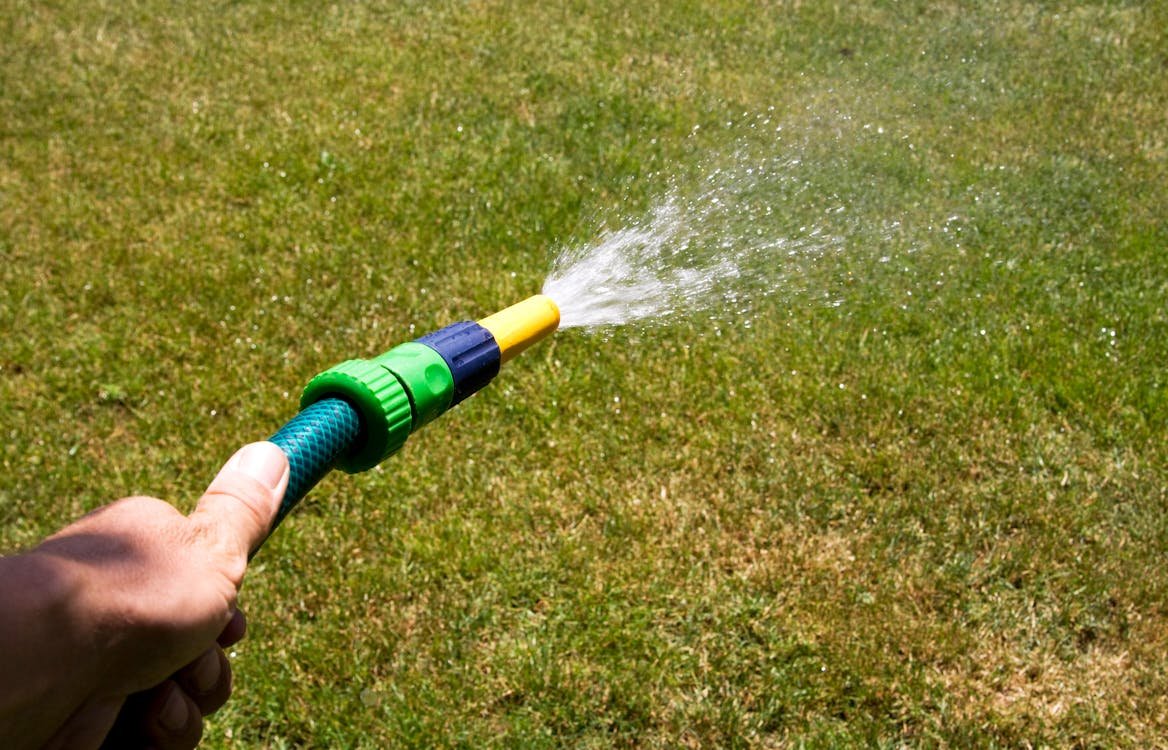
Watering seems like the simplest part of lawn care—just turn on the sprinkler, right? But improper irrigation is one of the leading causes of lawn problems, from fungal disease and shallow roots to wasted water and high utility bills. This guide gives you the science-backed approach to watering your lawn efficiently and effectively.
How Much Water Does Grass Actually Need?
Most established lawns need approximately 1 inch of water per week, including rainfall. This holds true for both cool-season and warm-season grasses under typical growing conditions, though the source of that inch matters greatly.
Why 1 inch? One inch of water penetrates to approximately 6–8 inches of soil depth—deep enough to reach the root zone. Shallow watering (less than 1 inch per session) only wets the top 1–2 inches, which trains roots to stay at the surface where they’re vulnerable to heat, drought, and drying winds.
In peak summer heat, established lawns may need 1.5–2 inches per week to stay fully green.
How to Measure Rainfall and Irrigation
Place several empty tuna cans or straight-sided containers around your lawn while your sprinkler runs. Time how long it takes to collect 1 inch. This varies widely by sprinkler type:
- Impact rotary sprinklers: ~40–60 minutes to deliver 1 inch
- Oscillating sprinklers: ~60–90 minutes to deliver 1 inch
- Pop-up in-ground sprinklers: ~20–45 minutes depending on coverage area
A rain gauge ($10–$20) is an inexpensive addition to your lawn toolkit that tells you exactly how much rain fell each week.
Deep and Infrequent: The Core Watering Principle
The most important irrigation concept isn’t how much water, but how you deliver it. Deep, infrequent watering produces a dramatically healthier lawn than frequent shallow watering.
Shallow, frequent watering (e.g., 15 minutes every day):
- Keeps only the top 1–2 inches moist
- Trains roots to grow near the surface
- Creates a lawn highly vulnerable to drought
- Promotes moss, algae, and fungal disease
- Wastes water through evaporation
Deep, infrequent watering (e.g., 30–45 minutes twice per week):
- Penetrates 6–8 inches into the root zone
- Encourages roots to grow deep where moisture is more stable
- Produces a drought-resistant lawn
- Reduces disease pressure
- More efficient water use
The ideal schedule for most established lawns: 2 sessions per week, each delivering approximately ½ inch of water.
Best Time of Day to Water
The best time to water your lawn is early morning, between 6–10 AM.
Here’s why timing matters:
-
Morning watering: Water soaks into soil before peak evaporation occurs at midday. Grass blades dry out during the day, minimizing fungal disease risk. Root absorption is most efficient in the morning.
-
Midday watering: Up to 30% of water is lost to evaporation before it reaches the roots. Avoid it during hot months.
-
Evening watering: Water sits on grass blades overnight, creating the warm, wet conditions that fungal diseases like brown patch and dollar spot thrive in. Avoid if you have any disease pressure.
If your schedule only allows evening watering, program your irrigation to finish by 8 PM rather than running at night.
Watering by Season
Spring
Water needs are lower as temperatures are mild and rainfall is generally more consistent. Supplement irrigation when weekly rainfall drops below 1 inch. As temperatures rise in late spring, begin increasing irrigation frequency.
Summer
Peak irrigation demand. Water requirements may double compared to spring:
- Cool-season grasses under heat stress: 1.5–2 inches per week (or allow partial dormancy to reduce water needs)
- Warm-season grasses in active growth: 1–1.5 inches per week
Water in the early morning. Consider allowing cool-season grass to go semi-dormant during extreme heat rather than fighting drought with constant irrigation. Our summer lawn care tips cover the full range of heat-season strategies beyond watering.
Fall
As temperatures drop, reduce irrigation frequency. Continue supplementing rainfall as needed, but deep watering becomes less critical as evaporation decreases. Most established cool-season lawns need minimal irrigation in October and November.
Winter
- Warm-season grasses in dormancy: No irrigation needed unless severe drought conditions persist.
- Cool-season grasses in mild winters: Minimal irrigation when temperatures drop below 40°F.
- Dormant winter lawns need one deep watering during extended dry periods to prevent crown desiccation.
Watering New Grass Seed vs. Established Lawns
New grass seed requires a completely different watering approach than established turf:
New seeding (first 4 weeks):
- Water lightly 2–3 times daily
- Keep top ½ inch consistently moist
- Never allow seed to dry out during germination
- 5–10 minutes per session is typically sufficient
Newly germinated seedlings (weeks 4–8):
- Transition to once-daily watering
- Gradually extend duration to 15–20 minutes per session
- Allow slight drying between sessions as roots deepen
Established lawn:
- 2 sessions per week, ½ inch each
- Adjust for rainfall
Signs of Underwatering vs. Overwatering
Underwatering Signs
- Footprints remain visible: Grass that lacks water doesn’t spring back after compression.
- Blue-gray color: A steel-blue tinge indicates drought stress.
- Wilting and folded blades: Grass blades curl or fold lengthwise to conserve moisture.
- Dry, hard soil: Soil pulls away from edges and becomes difficult to penetrate.
- Brown dormancy: Extended underwatering causes dormancy (cool-season grass) or death (warm-season grass).
Overwatering Signs
- Constantly soft, spongy soil: Never fully drying between watering sessions.
- Excessive thatch growth: Moist conditions accelerate thatch development.
- Fungal diseases: Dollar spot, brown patch, and pythium appear in consistently wet lawns.
- Moss and algae growth: Prefer constantly moist, poorly draining soil.
- Shallow roots: Overwatered lawns develop roots only in the top inch or two.
- Weed pressure: Many weeds, including crabgrass, prefer overwatered conditions.
Efficient Irrigation Tips
Water Savings Strategies
- Install a rain sensor: Automatically shuts off your irrigation system after rainfall. Required by law in some states. Cost: $25–$100.
- Use a smart controller: Weather-based irrigation controllers adjust scheduling automatically based on local weather data. Can reduce water use by 30–40%. For help choosing the right equipment, see our guide to the best sprinklers and irrigation systems.
- Water on a timer: Eliminates the “forgot to turn the sprinkler off” problem that wastes hundreds of gallons.
- Check for leaks: A single broken sprinkler head can waste 1,000+ gallons per hour.
- Adjust for slope: Water in shorter cycles on slopes to allow absorption and prevent runoff.
Sprinkler Efficiency
- Check coverage overlap: Adjacent sprinkler heads should overlap 30–50% for even coverage.
- Watch for dry strips: These indicate inadequate coverage and need head adjustment.
- Clean clogged heads: Sediment blocks spray patterns, causing dry spots.
- Level tilted heads: Even slightly tilted pop-up heads create dry strips on one side.
Drought and Lawn Watering Restrictions
During drought conditions or water restrictions:
- Allow dormancy: Cool-season grass can survive 4–6 weeks of dormancy without dying. One deep watering per month prevents crown damage.
- Prioritize new seedings: Established grass survives drought; new seedlings do not.
- Raise mowing height: Taller grass conserves moisture more effectively.
- Avoid fertilizing: Fertilizer during drought pushes growth that the plant can’t support.
Watering your lawn correctly—deep, infrequent, and in the morning—is one of the highest-impact habits you can develop. It produces deeper roots, healthier grass, lower water bills, and far fewer disease problems than the daily light watering approach most homeowners fall into. Pair great irrigation with a solid lawn fertilizer schedule and regular lawn aeration to give your grass everything it needs to thrive.