How to Plant Grass Seed for a Perfect Lawn

Planting grass seed is one of the most rewarding lawn care projects you can tackle. Whether you’re starting a brand-new lawn or filling in bare patches, knowing the right technique makes the difference between a lush, even lawn and a spotty disappointment. This guide walks you through every step of the process.
Why Proper Grass Seeding Matters
Grass seed is cheap. Labor is not. Doing this right the first time saves you weeks of frustration and wasted product. Improper seeding leads to poor germination, thin coverage, weed invasion, and erosion. A well-seeded lawn, by contrast, establishes a dense root system that crowds out weeds and survives summer stress with ease.
Step 1: Choose the Right Grass Seed
Before you pick up a bag, you need to know your climate zone. If you’re unsure which variety suits your region, our detailed guide on choosing the best grass seed for your lawn walks through every major option.
- Cool-season grasses (Kentucky Bluegrass, Tall Fescue, Perennial Ryegrass): Thrive in northern states with cold winters and mild summers. Best planted in early fall or spring.
- Warm-season grasses (Bermuda, Zoysia, St. Augustine, Centipede): Prefer the South and Southeast. Plant in late spring to early summer when soil temperatures exceed 65°F.
Read seed bag labels carefully. Look for a high germination rate (at least 85%), low weed seed content (under 0.5%), and a mix that suits your sun exposure—shade-tolerant blends for shadier yards, standard blends for full sun.
Step 2: Test Your Soil
Grass seed needs the right growing environment to germinate. A soil test (available through your local cooperative extension office for under $20) reveals:
- pH levels: Grass prefers a pH of 6.0–7.0. Outside this range, nutrients become unavailable even if you fertilize.
- Nutrient deficiencies: Low phosphorus especially hampers root development in new seedlings.
- Soil type: Sandy soils drain too fast; clay soils compact and drain too slowly.
Amend accordingly before seeding. Add lime to raise pH, sulfur to lower it, and compost to improve structure.
Step 3: Prepare the Soil Surface
This is the step most people skip—and where most seeding failures begin.
For New Lawns
- Remove all existing vegetation with a non-selective herbicide or sod cutter. Wait 2 weeks if using herbicide before seeding.
- Till the soil 4–6 inches deep to break up compaction.
- Grade the area so it slopes away from your home’s foundation (about 1–2% grade).
- Rake smooth, removing rocks, roots, and debris.
- Apply a starter fertilizer (high in phosphorus, like 10-20-10) and work it into the top inch of soil.
For Overseeding Existing Lawns
- Mow existing grass short (about 1.5 inches).
- Dethatch if thatch layer exceeds ½ inch.
- Aerate to create good seed-to-soil contact — our complete lawn aeration guide explains how to do this effectively.
- Rake lightly to loosen the surface.
Step 4: Seed at the Right Rate
Applying too little seed means thin coverage; too much causes overcrowding and weak seedlings. Recommended seeding rates vary by grass type:
- Kentucky Bluegrass: 2–3 lbs per 1,000 sq ft (new lawn); 1–1.5 lbs for overseeding
- Tall Fescue: 6–8 lbs per 1,000 sq ft (new); 3–4 lbs for overseeding
- Perennial Ryegrass: 5–8 lbs per 1,000 sq ft (new); 3–4 lbs for overseeding
- Bermuda Grass (hulled): 1–2 lbs per 1,000 sq ft
- Zoysia: 1–2 lbs per 1,000 sq ft
Use a broadcast or drop spreader for even coverage. Make two passes at half the rate—one in each direction—to avoid streaking.
Step 5: Ensure Seed-to-Soil Contact
Grass seed needs direct contact with soil to germinate. Seeds that sit on top of thatch or loose debris often fail.
Best methods:
- Lightly rake seed into the top ¼ inch of soil
- Use a lawn roller (can be rented) to press seed into soil
- Apply a thin layer (¼ inch) of topsoil or compost over seed to protect and anchor it
Step 6: Water Correctly
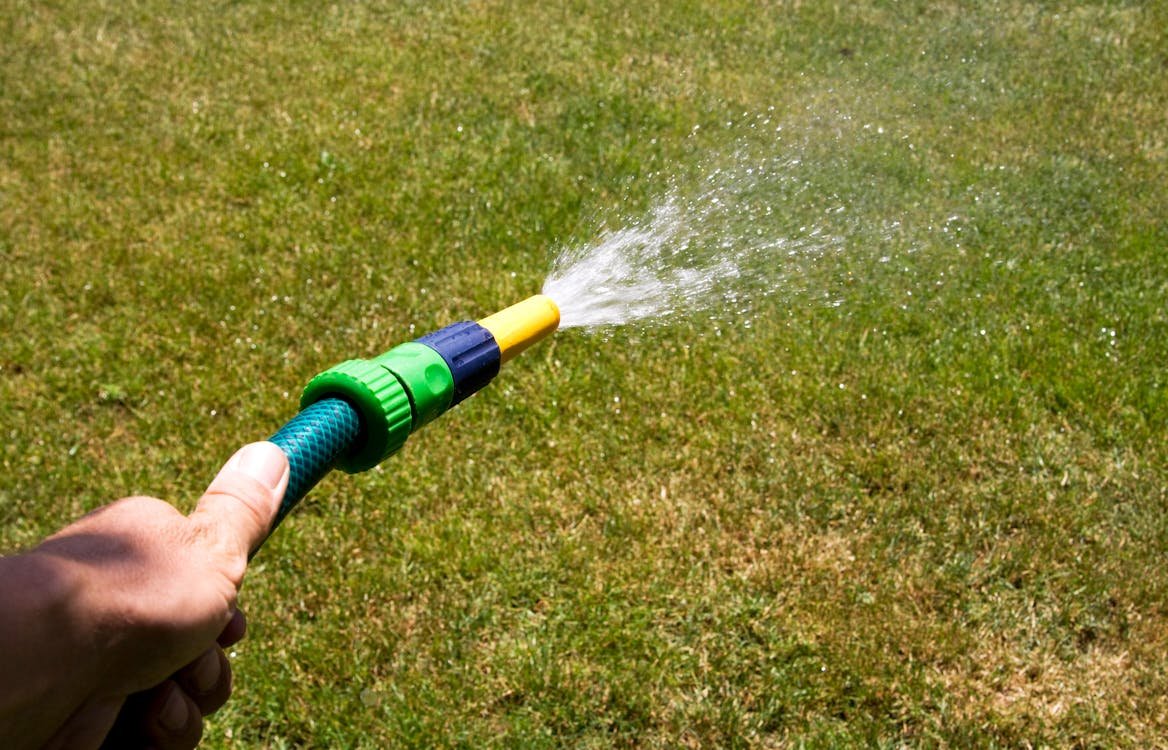
Watering is where most new lawns fail. The goal is to keep the top ½ inch of soil consistently moist—not soggy, not dry—until germination is complete.
Watering schedule:
- Days 1–14 (germination): Water lightly 2–3 times per day for 5–10 minutes each session. Never let the soil dry out.
- Days 15–30: Water once daily for 15–20 minutes as seedlings establish.
- After 30 days: Transition to deep, infrequent watering (1 inch per week in one or two sessions).
Early morning watering is best—it reduces evaporation and minimizes fungal disease risk.
Step 7: Aftercare and First Mowing
Patience Is Key
Most grass seeds germinate in 7–21 days, depending on the species and soil temperature. Bermuda can sprout in 5–7 days in warm soil; Kentucky Bluegrass may take 14–21 days even under ideal conditions. For a full breakdown of germination timelines by grass type, see our guide on how long grass seed takes to grow.
First mow: Wait until new grass reaches 3–4 inches before mowing. Set your mower to its highest setting and never remove more than ⅓ of the blade height in a single mow. Use a sharp blade—dull blades tear new seedlings out by the roots.
Stay off the lawn: Foot traffic before the grass is established (usually 4–6 weeks) compacts soil and kills fragile seedlings. Use flags or string to keep people and pets off.
Common Seeding Mistakes to Avoid
- Seeding at the wrong time: Planting cool-season grass in summer heat or warm-season grass in fall leads to failure.
- Skipping soil prep: Seeds need contact with loose, amended soil to thrive.
- Overwatering: Soggy soil promotes damping-off fungus that kills seedlings.
- Mowing too soon: Wait until grass reaches 3–4 inches and can handle foot traffic.
- Using old seed: Check the “test date” on the bag—germination rates drop significantly after a year.
Troubleshooting Poor Germination
If your grass isn’t coming up after 3 weeks, consider these causes:
- Soil temperature too low: Check that soil temps are above 50°F for cool-season and 65°F for warm-season grass.
- Seeds washed away: Heavy rain or overwatering can displace seed—you may need to reseed affected areas.
- Birds: Cover newly seeded areas with straw mulch or bird netting.
- Compacted soil: Poor germination in hard, clay soil means you need to aerate and till before reseeding.
Final Tips for Success
- Buy quality seed: Name-brand seed from reputable suppliers has better germination rates than discount bags.
- Straw mulch: A light covering (you should still see soil through it) protects moisture and deters birds without smothering seeds.
- Starter fertilizer: Applied before seeding, a phosphorus-rich starter fertilizer dramatically improves root development. Once the lawn is established, follow a proper lawn fertilizer schedule to keep it thriving season after season.
- Keep records: Note what seed you used, when you planted, and soil conditions—this helps you troubleshoot if problems arise.
Planting grass seed correctly takes a little planning and patience, but the results are worth it. A dense, well-established lawn starts with proper seeding, and every step you take now pays dividends for years to come.